 (1) (1) (1) (1).webp)
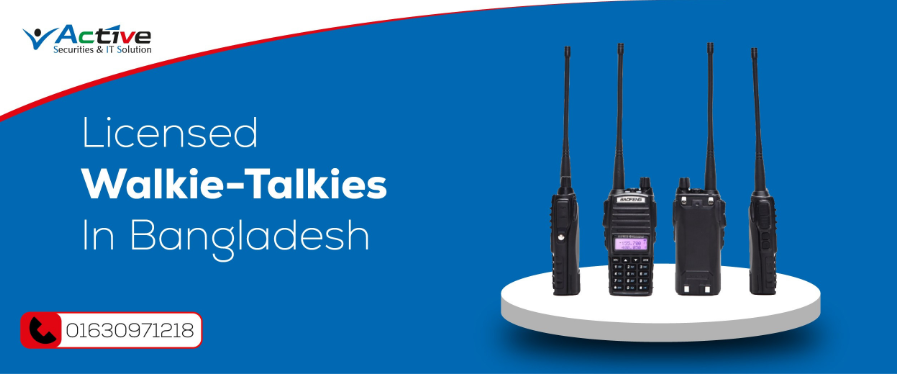
BTRC Walkie Talkie License (Bangladesh)| The Easy Guide — How to Apply, Costs, Rules, and Buying Advice
If your business or team uses walkie talkies in Bangladesh, you’ve probably come across the term “BTRC walkie talkie license.” But what’s that actually about? And do you really need one? Here’s what you need to know, without the jargon. We’ll walk you through when you need a license, how to get the right gear, and how to keep your conversations safe and clear from interference.
-
What the BTRC license is and why it matters
-
Who needs a license (and who usually doesn’t)
-
How to apply step-by-step (documents, fees, the LIMS system)
-
Typical timelines and practical tips to avoid delays
-
How to choose licensed walkie talkies and BTRC-authorized suppliers
-
Competitor behavior and how licensed suppliers position themselves
-
15 plain-English FAQs you’ll actually use
This is a practical, no-fluff manual written to help business owners, security managers, event organisers, factory supervisors, and IT/telecom staff in Bangladesh.
Quick summary — the short answer
BTRC, or the Bangladesh Telecommunication Regulatory Commission, handles all the licensing for radio communication gear, including most pro-level walkie talkies.
If you’re just looking for basic, low-power walkie talkies—the kind labeled “license-free”—you usually don’t need any paperwork from BTRC. But once you move up to more powerful models or want to use specific frequencies, you’ll need to get a proper BTRC license or register your device.
Stick with licensed suppliers if you want BTRC-approved equipment. They’ll give you all the details you need about licensing and can even help you with the whole application process. Shops like WalkieTalkiesBD and WalkieTalkieBD really highlight their BTRC authorization on their websites, so you know you’re getting legit, approved gear.
1. Why the BTRC walkie talkie license matters (short, real reasons)
-
Legal compliance: Using unlicensed radios on regulated frequencies can create legal trouble. BTRC enforces the rules. BTRC
-
Interference management: A BTRC license assigns frequencies or ensures you use allowed bands, reducing interference with other services. btrc.portal.gov.bd
-
Operational privacy and reliability: Licensed allocations help ensure private, clear communication for security teams, events, hospitals, airports and industry. activesisbd.com
-
Supplier trust: Buying from a BTRC-authorized supplier gives you warranty, genuine hardware, and documentation for compliance checks. Competitor sites highlight this as a selling point. walkietalkiesbd.com+1
2. Who usually needs a BTRC walkie talkie license?
You probably need a BTRC license if you run professional radio systems with higher power, dedicated channels, repeaters, or commercial operations. Typical examples:
-
Private security companies and bodyguard teams
-
Large events (concerts, expos) with centrally managed radio nets
-
Industrial plants and factories using site-wide radio systems
-
Transport and logistics fleets with base stations or repeaters
-
Hospitals, hotels, and campuses with private radio systems
-
Government agencies, NGOs with special allocations
Small shops, families, and local, low-power short-range radios (certain 446 MHz license-exempt models) may not require BTRC permission — but check the specs and supplier advice. Always confirm with BTRC if you’re unsure. activesisbd.com3. The BTRC licensing process — step by step (practical)
BTRC has moved much of its licensing to an online LIMS portal. Creating a LIMS account and following the e-license workflow is now the main route for applications. lims.btrc.gov.bd
Below is a simple, practical process you can follow. I’ll make each step actionable.
Step 1 — Decide exactly what you need
-
Do you need single handheld radios for short range, or a system with base stations/repeaters and many users?
-
If you want private channels, repeaters, or long-range transmission, you will almost always need a license.
Step 2 — Choose equipment and an authorized supplier
-
Select models that meet BTRC frequency and power rules. Buy from suppliers who explicitly mention BTRC authorization. Competitor websites often list this and can help prepare paperwork.
Step 3 — Prepare company documents (if applying as an organization)
Common items typically required (varies by license type):
-
Company registration certificate (trade license)
-
Tax identification (TIN) or income tax documents
-
Letter of intent (why you need radios, number of sets, locations)
-
Equipment list (model, serials, power output, freq. range)
-
Payment instrument for fees (BTRC fee schedule) (Exact list appears on BTRC forms and in LIMS; check the current form).
Step 4 — Apply via LIMS (preferred, e-license route)
-
Create an account at BTRC’s LIMS (lims.btrc.gov.bd) and fill the radio communication apparatus license form (search “License Application Form of Radio Communication Apparatus” on BTRC). Upload the supporting documents.
Step 5 — Pay fees and follow up
-
Fees depend on the license type. Earlier guidance and examples exist on BTRC and supplier pages (e.g., past applicants paid small processing fees plus license fees). Always confirm current fee schedules on BTRC.
Step 6 — Technical checks & frequency assignment
-
BTRC may perform frequency coordination or verify technical specs (power, channel spacing). For complex systems they may assign specific channels. btrc.portal.gov.bd
Step 7 — Receive e-license
-
Once approved, BTRC issues an e-license through LIMS and you’re legal to operate on assigned frequencies. BTRC has announced a shift to e-licenses and LIMS workflows for improved speed. lims.btrc.gov.bd
4. Timeline & common delays — realistic expectations
-
Simple, low-power registrations (if allowed) — days to a couple weeks.
-
Full radio licenses with frequency assignment / repeaters — can take several weeks to a few months, depending on workload and coordination requirements.
-
Delays often come from incomplete documents, incorrect equipment specs, or missing proof of business use. Double-check everything before submission.
Practical tip: use a BTRC-authorised supplier who helps prepare documentation — it reduces mistakes and shortens processing time. Competitors stress this in their service copy.
5. What exactly does the license let you do?
Depending on the license class:
-
Legally operate assigned frequencies and power levels without enforcement risk.
-
Use repeaters and base stations where permitted.
-
Avoid harmful interference with other radio users.
-
Demonstrate compliance to customers, clients, or safety auditors. btrc.portal.gov.bd
6. Licensed vs license-free walkie talkies — clear comparison
| Topic | Licensed radios | License-free (consumer) radios |
|---|---|---|
| Typical use | Commercial, security, repeaters, long range | Small teams, personal, short range |
| Frequency control | Assigned by BTRC | Limited to specific unlicensed bands (check device) |
| Power & range | Higher power, longer range | Low power, limited range |
| Legal risk | Covered once licensed | Allowed only if device meets unlicensed specs |
| Supplier | Often sold by authorised dealers | Widely available (less regulated) |
| Best for | Security agencies, large events, industry | Shops, family outings, small teams |
7. Buying advice: How to choose walkie talkies when you need a BTRC license
When your operation requires a license, choose both hardware and supplier carefully.
Choose hardware that:
-
Matches the frequency and power specified in your license application
-
Has clear manufacturer data (model, serials, power output) to upload with BTRC forms
-
Meets ruggedness standards if used outdoors (IP rating if needed)
-
Supports encryption or private channels if you need secure comms (note: encryption may be regulated)
Choose suppliers that:
-
State they are BTRC authorised or experienced in licensing support (competitors prominently advertise this).
-
Provide product datasheets for submission to BTRC
-
Offer after-sales support and warranty
-
Help with LIMS submission if needed
Practical note: Suppliers who sell only low-cost unbranded radios may not support a license application. Prefer reputable suppliers that can provide conformity documentation.
10. Cost considerations — what to budget for
Costs vary widely depending on license type and system complexity:
-
Application / processing fees (BTRC): small administrative fees; confirm current amounts on BTRC site. BTRC
-
Equipment cost: radios, repeaters, antennas, power supply — can range from a few thousand BDT per set for consumer units to several hundred thousand BDT for full repeater systems. Competitor product pages list price ranges.
-
Installation & cabling: for base stations and repeaters.
-
Technical consultancy: if you hire a supplier to prepare the LIMS submission and technical specs.
-
Renewal fees: some licenses need periodic renewal — check BTRC.
Budget tip: For many corporate users, the one-time setup + license cost is modest against the value of interference-free, private communications.
11. Real use cases (short stories that show value)
-
Security company: assigned channels through a BTRC license meant quiet, private comms during events and no interference with local shops.
-
Factory: licensed repeaters covered the whole plant and improved safety response times during night shifts.
-
Hotel: licensed radios enabled discreet staff coordination while meeting BTRC safety requirements.
Real examples like these, with client consent, boost trust and help potential buyers visualise benefits.
12. Post-licensing operations and compliance
After you receive an e-license:
-
Keep equipment records and the license copy available for inspections.
-
Adhere to assigned power levels and frequencies.
-
Report any interference to BTRC promptly.
-
Renew before expiry via LIMS and maintain accurate organizational details in the portal. lims.btrc.gov.bd
Non-compliance risks include fines and equipment seizure — so treat licensing as an operational control, not paperwork.
13. Frequently asked questions — the 15 practical FAQs (plain answers)
1. What is the BTRC walkie talkie license? A government-issued authorization that lets you legally operate radio communication devices at assigned frequencies and power in Bangladesh. BTRC
2. Do I need a license for every handheld walkie talkie? Not always. Low-power, consumer license-free models on permitted bands may not require a license. But professional systems, repeaters, or high-power devices usually do. Ask the supplier or check BTRC. Walkie Talkie BD
3. How do I apply for a BTRC walkie talkie license? Create an account on BTRC’s LIMS portal, fill the radio communication apparatus form, upload documents, pay fees, and await frequency coordination and approval. BTRC4. How long does the license take? Simple registrations can be quick (days–weeks); complex frequency assignments and repeater approvals can take longer. Accurate documents speed the process. lims.btrc.gov.bd
5. What documents are required? Typically: company registration, tax documents, equipment datasheets, letter of intent, and proof of fee payment. Exact lists are in the BTRC application forms. BTRC
6. Can walkie talkies sold in Bangladesh be illegal? Yes — some imported or non-type-approved units can fall outside permitted specs. Buy from authorized suppliers and ask for compliance documentation. Competitor stores clearly state authorization to reassure buyers.
7. What is LIMS? LIMS is BTRC’s License Information Management System — the online portal for e-license applications and renewals. BTRC is moving to e-licensing through LIMS. lims.btrc.gov.bd
8. Can a supplier help me with licensing? Yes. Reputable suppliers often help prepare technical datasheets and submit information, making approval smoother.
9. Are there fees to pay? Yes. There are processing and license fees; amounts depend on license type. Confirm current fees on BTRC or ask your supplier. BTRC
10. Can NGOs or schools get a license? Yes; organizations demonstrating legitimate need (security, campus comms, events) can apply. Provide organizational documents and usage plans. activesisbd.com
11. Is encryption allowed? Encryption and certain technical features may be regulated; check BTRC rules and mention required features during application. btrc.portal.gov.bd
12. What happens if I use unlicensed radios? You risk fines, equipment seizure, and legal action. Always verify device status and license requirements. BTRC
13. Do I need to renew the license? Yes — many licenses require renewal. Use LIMS to manage renewals and updates. lims.btrc.gov.bd
14. Can I buy walkie talkies without a license from walkietalkie shops? Yes, but those are usually license-free consumer models. If you plan professional use, buy BTRC-compatible equipment from authorised suppliers.
15. Who do I contact at BTRC for help? Use the LIMS portal and the contact information published on the official BTRC website. For procedural questions, vendors often help as well. lims.btrc.gov.bd
Final words
Getting a BTRC walkie talkie license can sound bureaucratic, but it’s simply the right way to run professional radio communications in Bangladesh. It protects your operation, avoids interference, and keeps your team working reliably and legally.
If you run a security company, manage large events, operate a factory, or need private, interference-free radio communications — treat licensing as an essential part of your plan. Use licensed equipment, buy from authorised suppliers, and follow the LIMS process for a smooth approval.